Grouphorse in the News
ECOSOC Youth Forum Official Side Event on Trustworthy Data and Responsible AI.
Updated:July 06, 2026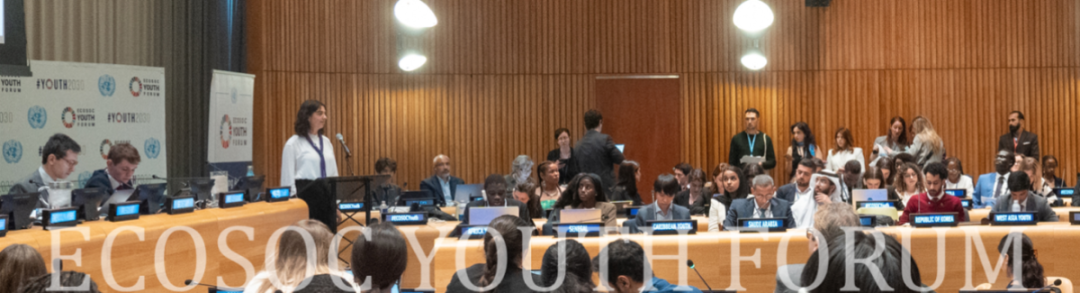
On April 16, 2026, the Official Side Event of the 2026 UN Economic and Social Council (ECOSOC) Youth Forum, titled "Trustworthy Data and Responsible Artificial Intelligence: Youth-Led ESG Delivery and Innovative Partnerships," was successfully held online.
The UN Economic and Social Council is one of the six principal organs of the United Nations. Since its establishment in 2012, the ECOSOC Youth Forum has become an important platform within the UN system for dialogue between young people and Member States as well as other stakeholders. This side event was co-hosted by the Tianjin Eco-City Green Friends Ecological Culture Promotion Association and the Sichuan International Studies University - Grouphorse ESG Global Governance Talent Industry College. Centering on the core question of how to upgrade "compliance discourse" into an "implementation framework for public governance" in the digital age, the event explored how trustworthy data and responsible artificial intelligence can empower young people to transform their ideas into verifiable, replicable, and scalable ESG deliverables.
Experts and scholars from UN Headquarters, the World Health Organization, and Stanford University, along with youth representatives from Columbia University, Tsinghua University, and Shanghai Starriver Bilingual School, gathered online to exchange views on frontier topics including educational equity, environmental monitoring, public health, biomedicine, urban safety, and agricultural innovation, jointly exploring pathways for youth participation in global governance.
The session was moderated by Wang Muyao, an Adjunct Lecturer in the Enterprise Risk Management program at Columbia University. In the opening segment, Tang Xing, Executive Dean of the Sichuan International Studies University - Grouphorse ESG Global Governance Talent Industry College and Founder of Grouphorse Group, delivered remarks as a representative of the host organizations. Taking as his starting point the historic moment when the UN Summit of the Future adopted the Pact for the Future and the Global Digital Compact in 2024, he noted that digital technologies are no longer merely efficiency tools but are increasingly becoming key factors in shaping trust, fairness, and development quality. He distilled the core proposition of the side event into a single question: "How do we move from commitment to delivery?" He then elaborated on three key points: trustworthy data is the foundation of public trust and effective delivery; responsible artificial intelligence is an essential governance prerequisite in the digital age; and young people must evolve from being participants in issues to deliverers of outcomes. He emphasized that young people are not lacking in passion or creativity; the real challenge lies in transforming passion into evidence, initiatives into results, and fragmented actions into sustainable and verifiable mechanisms for collaboration.
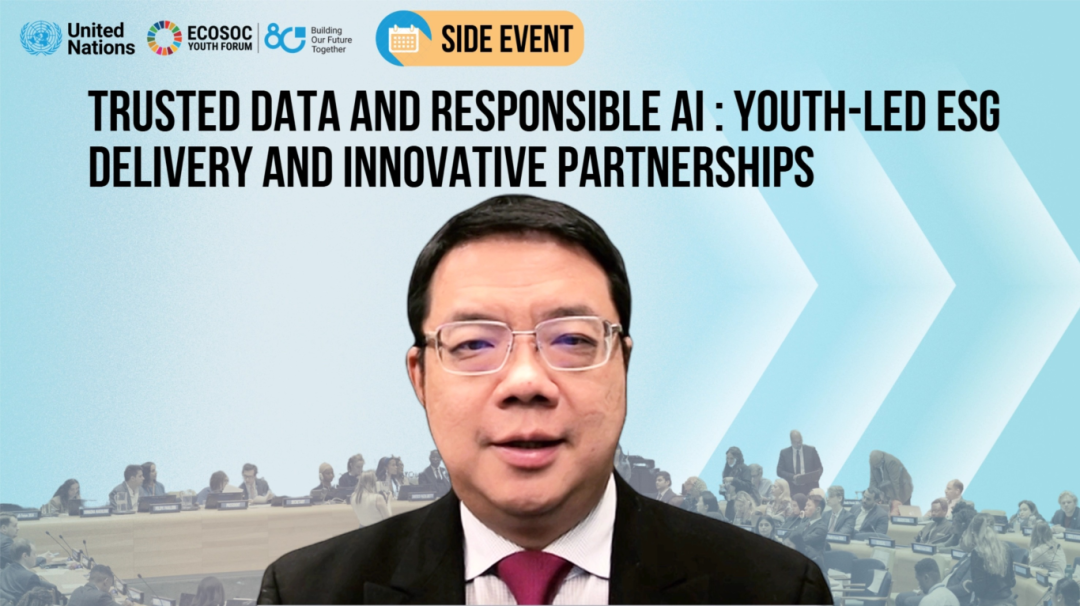 ▲Mr. Tang Xing, Executive Dean of the Sichuan International Studies University - Grouphorse ESG Global Governance Talent Industry College and Founder of Grouphorse Group.
In the keynote speech session, Mario Baez, former Chief Accountability Officer of the United Nations Secretariat, delivered a presentation titled "From Accountability to Delivery: A Governance Framework for Trustworthy Data and Auditable Outcomes." Drawing on his over three decades of governance experience within the UN system, he noted that traditional accountability is largely a "backward-looking" mechanism, focused on verifying whether rules have been followed and budgets balanced. However, as the 2030 Agenda enters its critical delivery phase, global governance is shifting from "compliance discourse" to "verifiable delivery." He emphasized that one of the greatest obstacles young people face in advancing SDGs 6, 7, 9, 11, and 17 is that their ideas are often trapped in a "black-box system" characterized by fragmented data, opaque processes, and unverifiable outcomes, making it difficult to gain the trust of governments, businesses, and international organizations. Therefore, trustworthy data must be regarded as a new foundation for development, and artificial intelligence must be placed under a responsible governance framework. Through auditable, traceable, and reusable chains of evidence, youth projects can be transformed from scattered initiatives into public governance solutions that can be replicated across regions. At the same time, cross-institutional partnerships should not remain one-off interactions but should be upgraded into long-term co-creation mechanisms that connect universities, technology platforms, and civil society organizations.
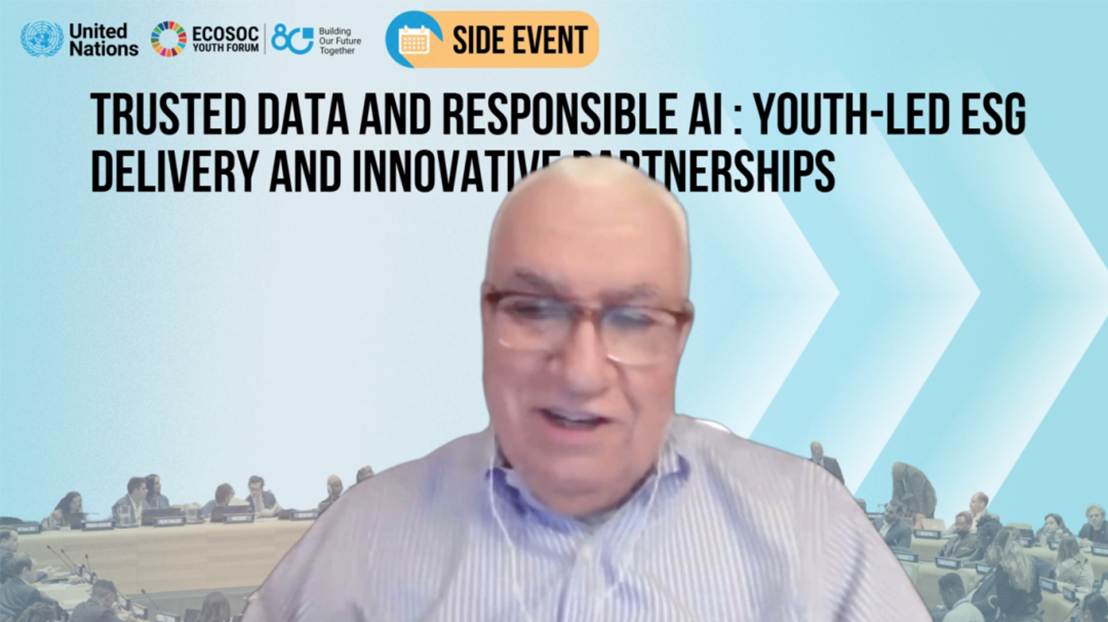 ▲Mr. Mario Baez, former Chief Accountability Officer of the United Nations Secretariat.
Barry Katz, Professor at Stanford University and Researcher at IDEO, delivered a presentation titled "From Insight to Delivery: Applying Design Thinking to Build Auditable and Replicable Projects," sharing the practical logic of using design thinking to serve global development issues. He pointed out that design should no longer be understood as making "prettier new things," but rather as an innovation strategy oriented toward real-world problems, shifting the mode of thinking from "how to make a better product" to "how to find a better solution." To illustrate this, he highlighted a case in which a Stanford student team designed low-cost temperature-maintenance equipment for premature infants in underserved regions. Rather than stopping at the product concept of "improving the incubator," the team conducted field research in Nepal and discovered that the core problem was not the equipment itself, but the fact that a large number of infants were being born in rural villages lacking electricity, medical care, and proximity to cities. On this basis, the student team iteratively refined materials, prototypes, and usage scenarios, ultimately developing a solution that could maintain an infant's body temperature for eight hours without electricity, and subsequently founded a social enterprise to promote global deployment. Barry Katz emphasized that truly effective design must be grounded in field research, subjected to repeated testing, respectful of cultural differences, and ultimately must move beyond the classroom into the real world, becoming a delivery system that can be verified, replicated, and sustained over time.
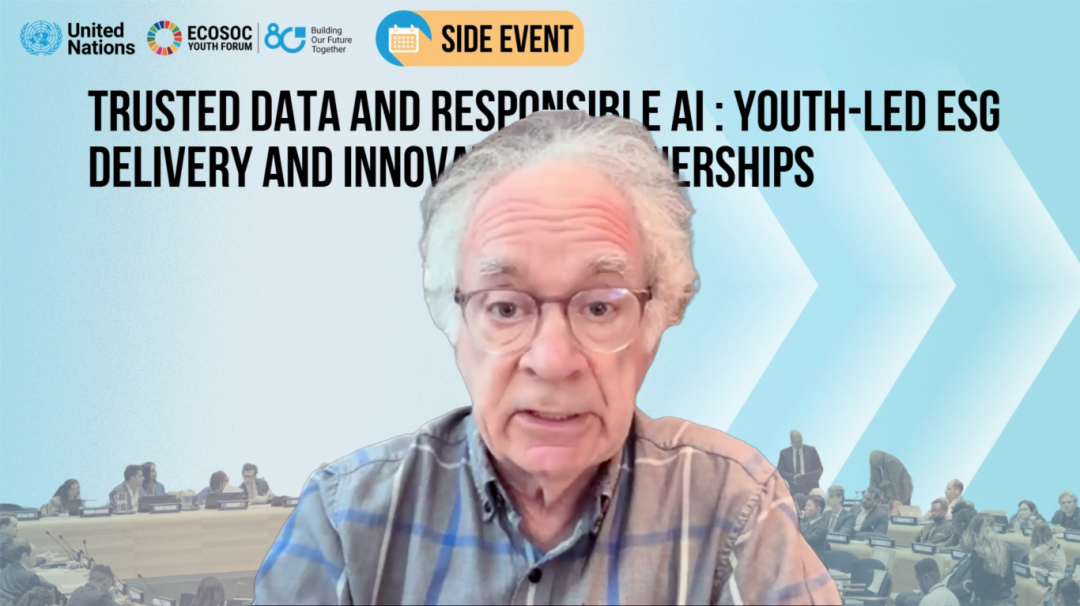 ▲Professor Barry Katz of Stanford University, also a Researcher at IDEO.
Margaret Harris, former Spokesperson for the World Health Organization, delivered a presentation titled "Social Trust and Evidence Communication: The Critical Role of Responsible Communication in ESG Delivery," offering an in-depth exploration of "how to build trust through communication." She noted that no matter how good an idea, technology, or project may be, if it cannot be trusted by its target audience, it will never truly translate into action; and once trust is damaged, restoring it becomes exceedingly difficult. Drawing on her extensive experience in public health risk communication, she emphasized that the prerequisite for building trust is not one-way messaging, but genuine listening, understanding what people are thinking, what their concerns are, and what cultural sensitivities exist, while also avoiding contradictory or politicized expressions that erode public trust through coordinated, multi-platform information dissemination. She particularly stressed that credible communication must also dare to acknowledge uncertainty, continuously update information, and use clear, non-jargon language. More importantly, all communication must be connected to services that are accessible and truly available on the ground; otherwise, even the most accurate information will quickly lose its credibility. Drawing on frontline cases from the Ebola and COVID-19 outbreaks, she illustrated that only when evidence communication, community understanding, and accessible services form a closed loop does trust truly translate into action, thereby supporting the delivery of the Sustainable Development Goals.
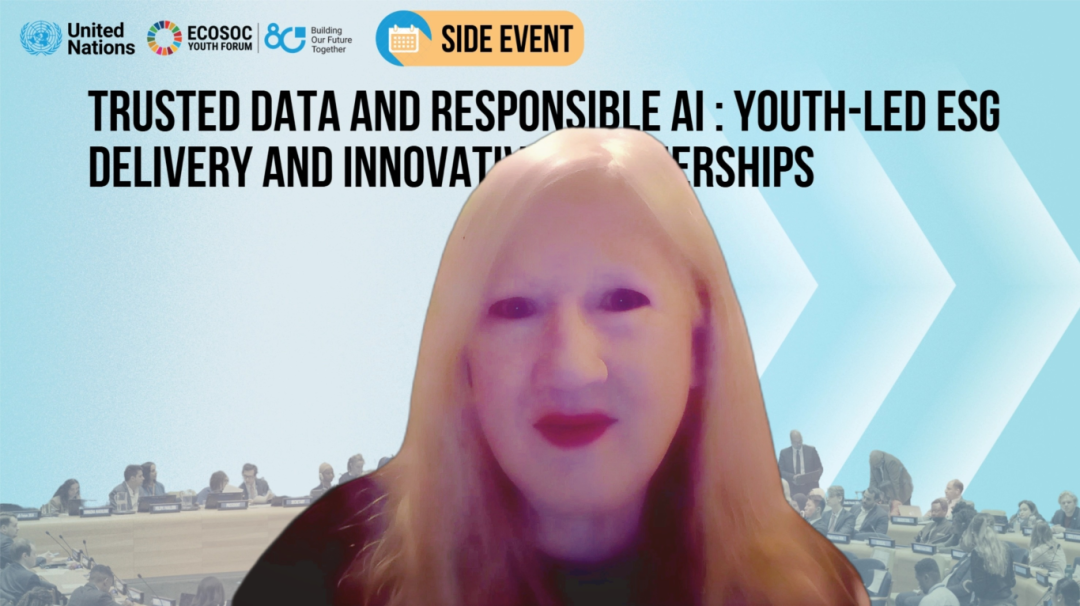
▲Ms. Margaret Harris, former Spokesperson for the World Health Organization.
The Youth Project Showcase was a major highlight of the side event, featuring twelve youth representatives from Columbia University, Tsinghua University, and Shanghai Starriver Bilingual School, who presented their research and practical achievements in sequence, all centered on the theme of "auditable delivery."
Deng Zhuoyao, a Master of Science in Applied Analytics student at Columbia University Class of 2026, delivered a presentation titled "They Have Our Data, But They Don't Protect Us," addressing data governance and youth well-being in the digital age. Focusing on adolescent mental health, she pointed out issues in cross-border AI algorithm applications, including the lack of clinical intervention, model bias, and unauthorized changes in data use purposes, reflecting the vulnerable position of data subjects in terms of privacy, informed consent, and control rights. She emphasized that data is not merely a factor of production but also concerns individual dignity and social equity, calling for the urgent establishment of a more transparent and accountable governance system. She also appealed for data authorization mechanisms to be refined with a user-rights orientation, and encouraged the international community to jointly explore global data governance rules that balance technological innovation with the protection of rights and interests.
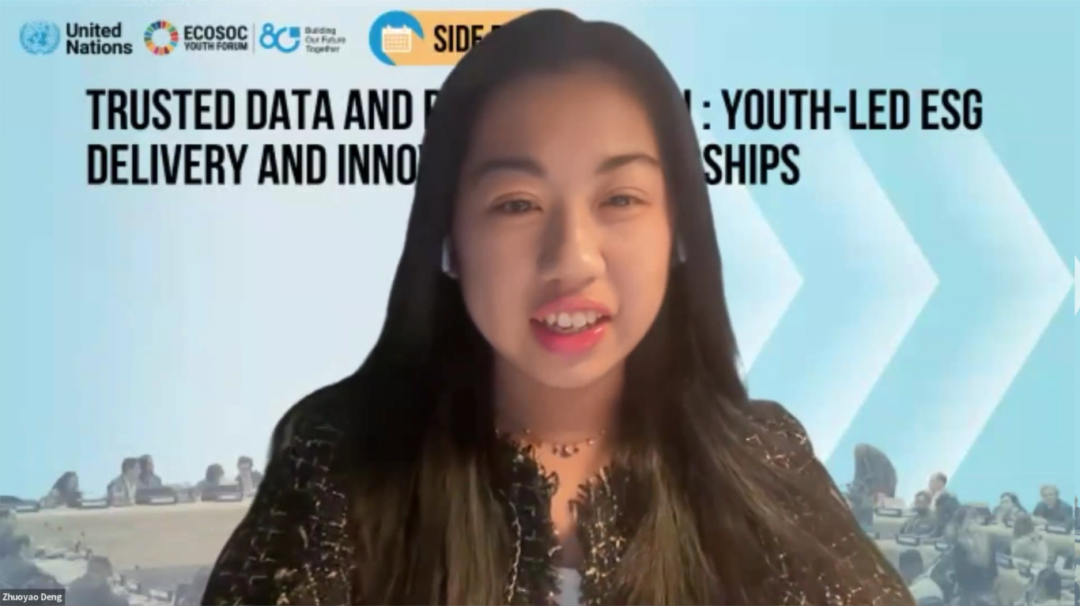
▲Ms. Deng Zhuoyao, a graduate student in the Master of Science in Applied Analytics program at Columbia University, Class of 2026.
Zhang Yue, a Master's student at Tsinghua University, Class of 2025, who has work experience at the Food and Agriculture Organization of the United Nations, delivered a presentation titled "From Trustworthy Data to Innovation: Youth-Led AI and Knowledge Systems Empowering ESG Delivery in Agri-Food Systems." She explored how artificial intelligence and knowledge systems can transform fragmented data into structured evidence that can be used for policy-making, scientific research, and practical dissemination. Drawing on the FAO's Agricultural Food Technology and Innovation Outlook (ATIO) project, she noted that truly valuable innovation comes not only from cutting-edge technology but also from the experiential knowledge generated by grassroots producers through on-the-ground practice. Therefore, global agri-food system governance urgently needs to build more open, connected, and inclusive knowledge infrastructure. She emphasized that the significance of artificial intelligence lies not in replacing human judgment, but in enhancing the efficiency of knowledge identification, classification, and retrieval, helping young people become not only users of knowledge systems but also their builders.

▲Ms. Zhang Yue, a graduate student at Tsinghua University, Class of 2025.
Shi Minghao from Shanghai Starriver Bilingual School delivered a presentation titled "Bridging the Scheduling Intelligence Gap: An Open-Source Computing Pathway for SDG 9 Inclusive Industrialization." He proposed a factory task scheduling model based on cellular automata principles, which simulates worker fatigue accumulation and performance fluctuations in real time, providing a low-cost, open-source optimization solution for manufacturing workforce allocation, and has already been published on GitHub. He pointed out that small and medium-sized enterprises in low- and middle-income countries, which account for 70% of global manufacturing employment, have long been unable to afford proprietary scheduling systems, making open-source pathways the only viable direction for bridging this governance gap.
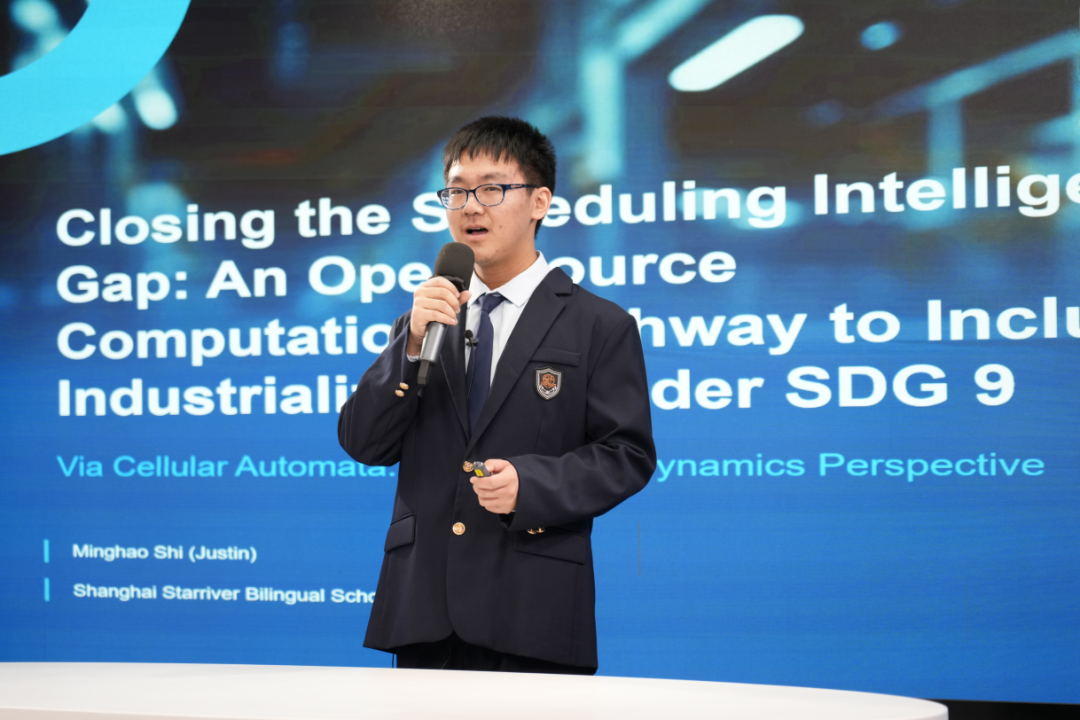 ▲Mr. Shi Minghao, a student at Shanghai Starriver Bilingual School.
Huang Yanming from Shanghai Starriver Bilingual School delivered a presentation titled "Bridging the Intelligence Divide: A Fairness-Aware AI Framework for Every Child." He pointed out that if AI educational tools are trained on biased historical data, they will solidify rather than eliminate educational inequalities at machine speed. Citing data from UNESCO, he noted that approximately 400 million children worldwide complete primary school without acquiring basic literacy skills. He proposed a "Multidimensional Fairness Audit Matrix," covering five dimensions, including group fairness, individual fairness, intersectional fairness, and temporal fairness, as a mandatory assessment tool for publicly funded AI educational tools.
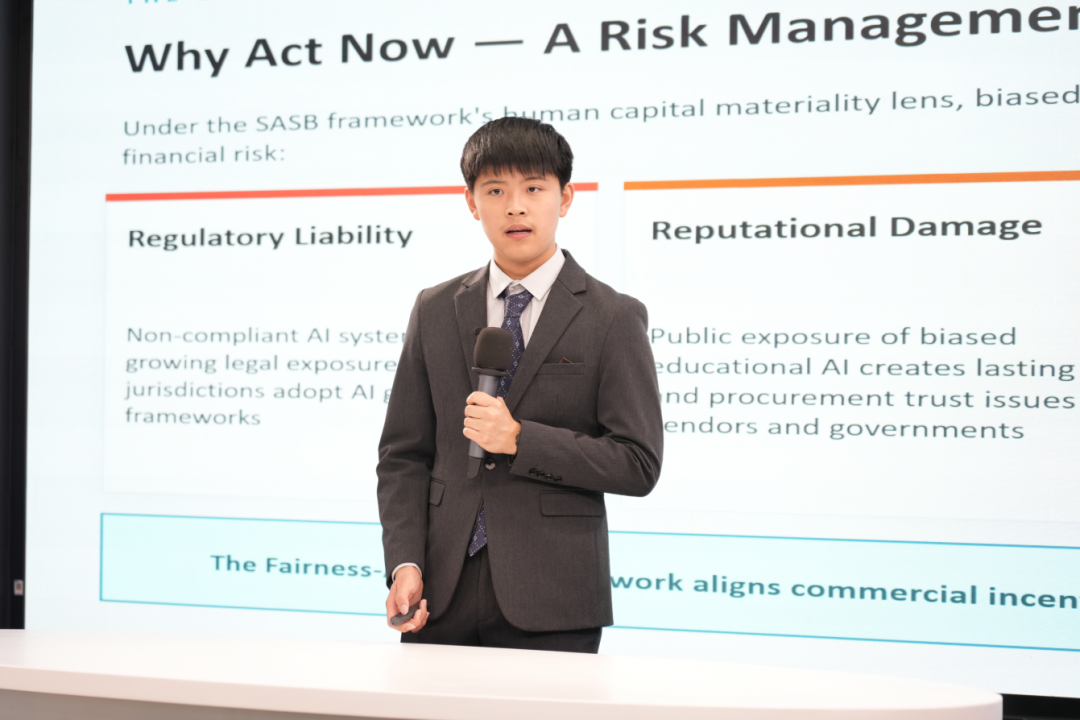 ▲Mr. Huang Yanming, a student at Shanghai Starriver Bilingual School.
Xiao Ranze from Shanghai Starriver Bilingual School delivered a presentation titled "From Educational Divide to Governance Transformation: A Synergistic Pathway of SDG 4 × SDG 9 × SDG 17." He pointed out that the fundamental problem of educational inequality lies not only in resource scarcity but also in the imbalanced distribution of knowledge infrastructure. Drawing on UNESCO data and his team's rural teaching practice in Anhui and Yunnan provinces, he emphasized that geography and income continue to profoundly shape children's development opportunities. He also noted that global education governance still faces challenges such as insufficient financing, imbalanced resource allocation, and weak innovation infrastructure, calling on multilateral institutions to promote financing for digital education infrastructure and the development of multilingual open platforms.
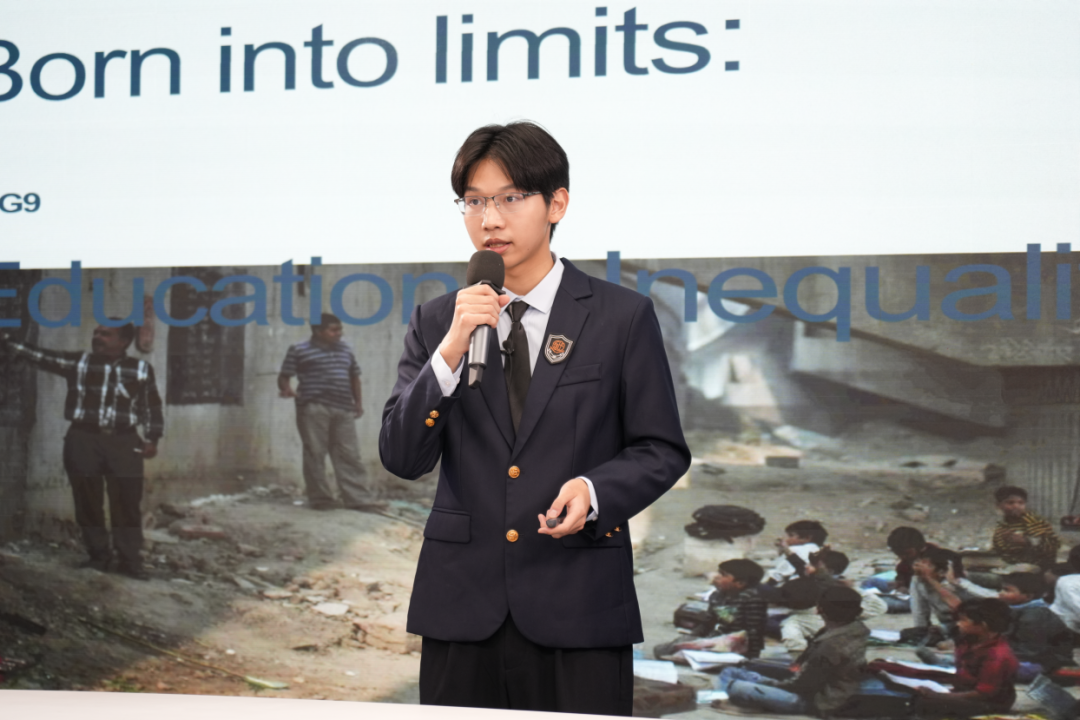 ▲Mr. Xiao Ranze, a student at Shanghai Starriver Bilingual School.
Wang Zimeng from Shanghai Starriver Bilingual School delivered a presentation titled "One Health, One Governance: A Multilateral Framework for Combating Antimicrobial Resistance." Focusing on the cross-sectoral governance crisis of antimicrobial resistance (AMR), she noted that the World Health Organization's Global Antimicrobial Resistance Surveillance System (GLASS) has insufficient coverage, leaving a large portion of global antibiotic consumption, particularly in the livestock sector, in data blind spots and governance vacuums. She put forward three specific recommendations: establishing a binding global reporting protocol that covers veterinary antibiotic use data, setting up a "Transition Fund for Responsible Antimicrobial Use," and promoting the establishment of global antimicrobial responsibility standards for food supply chains under the United Nations Conference on Trade and Development (UNCTAD).
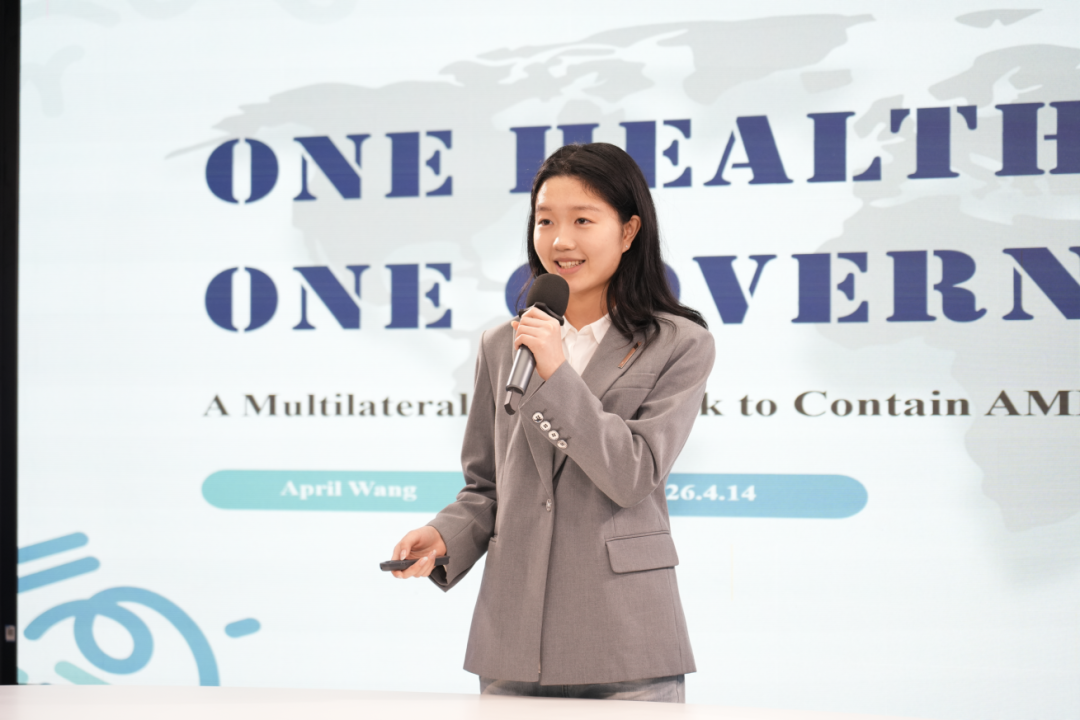 ▲Ms. Wang Zimeng, a student at Shanghai Starriver Bilingual School.
Sha Runchen from Shanghai Starriver Bilingual School delivered a presentation titled "From Information Crisis to Governance Action: A Decentralized Framework for SDG 6 × SDG 17." He pointed out that the fundamental problem in water quality governance is not pollution itself, but the lack of information. Citing the 2025 SDG Report, he noted that in 2024, only 60,000 water quality measurements globally came from the poorest regions, and this coverage gap puts the health of 4.8 billion people at risk. He demonstrated a self-developed decentralized edge-computing water quality monitoring prototype, integrating an origami robot platform, drone-based patrol surveys, and real-time data processing. He called on the UN Environment Programme to establish global decentralized monitoring standards, on the UN Economic Commission for Europe to promote a cross-border water data sharing compact, and on the integration of youth environmental monitoring networks into certified data verifier systems.
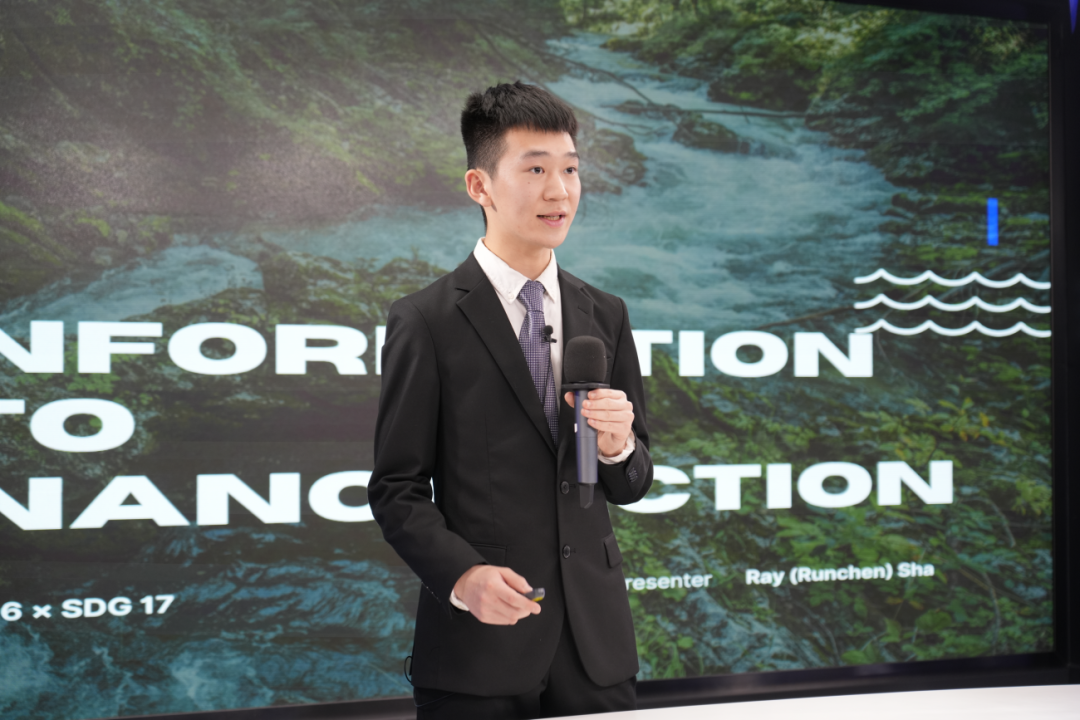 ▲Mr. Sha Runchen, a student at Shanghai Starriver Bilingual School.
Ren Jiahong from Shanghai Starriver Bilingual School delivered a presentation titled "Promoting Slow-Release Fertilizer Technology Through a Multilateral Framework," introducing the principle of sustained release from the pharmaceutical field into agricultural fertilizer design. Through laboratory research, he verified a controlled-release phosphorus fertilizer formulation based on hydroxypropyl methylcellulose and ethyl cellulose, which can significantly reduce the peak load of nitrogen and phosphorus runoff. He pointed out that conventional chemical fertilizers release the majority of their nutrients within 24 to 72 hours after application, far exceeding the uptake rate of crops, with agricultural runoff accounting for over 50% of global freshwater eutrophication events. He proposed establishing an "Open Slow-Release Agricultural Technology Repository," setting up a "Water-Wise Agricultural Innovation Special Fund," and called on the UN Economic and Social Council to establish a youth agricultural innovation scholarship mechanism.
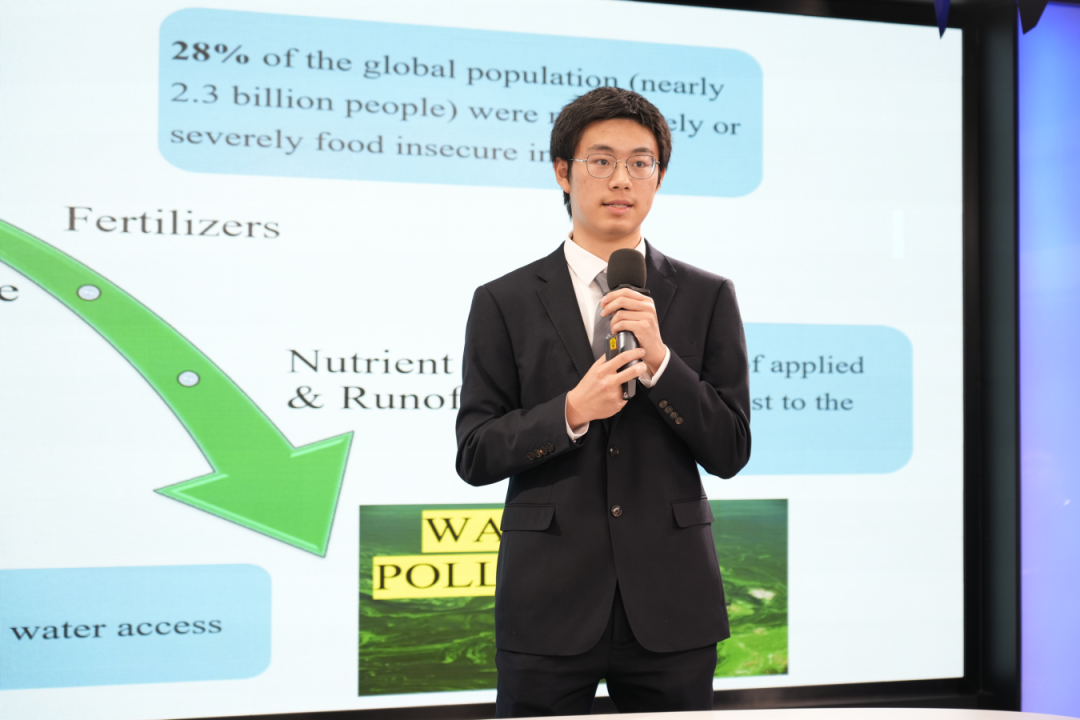 ▲Mr. Ren Jiahong, a student at Shanghai Starriver Bilingual School.
Qu Chenyang from Shanghai Starriver Bilingual School delivered a presentation titled "An AI-Assisted Framework for Aviation Wildlife Safety." Taking the Jeju Air accident in December 2024 as a starting point and drawing on field research conducted around Shanghai Hongqiao International Airport, he proposed a "closed-loop AI-assisted audio-visual bird dispersal system" that integrates detection, intervention, and verification. By actively countering biological adaptation through dynamically changing signals, the system effectively avoids the failure modes of traditional static bird dispersal methods. He called on the International Civil Aviation Organization (ICAO) to establish machine-readable wildlife strike data protocols, and urged the International Telecommunication Union and ICAO to jointly establish an open aviation AI certification framework, with technology transfer mechanisms to ensure that airports in developing countries benefit equally.
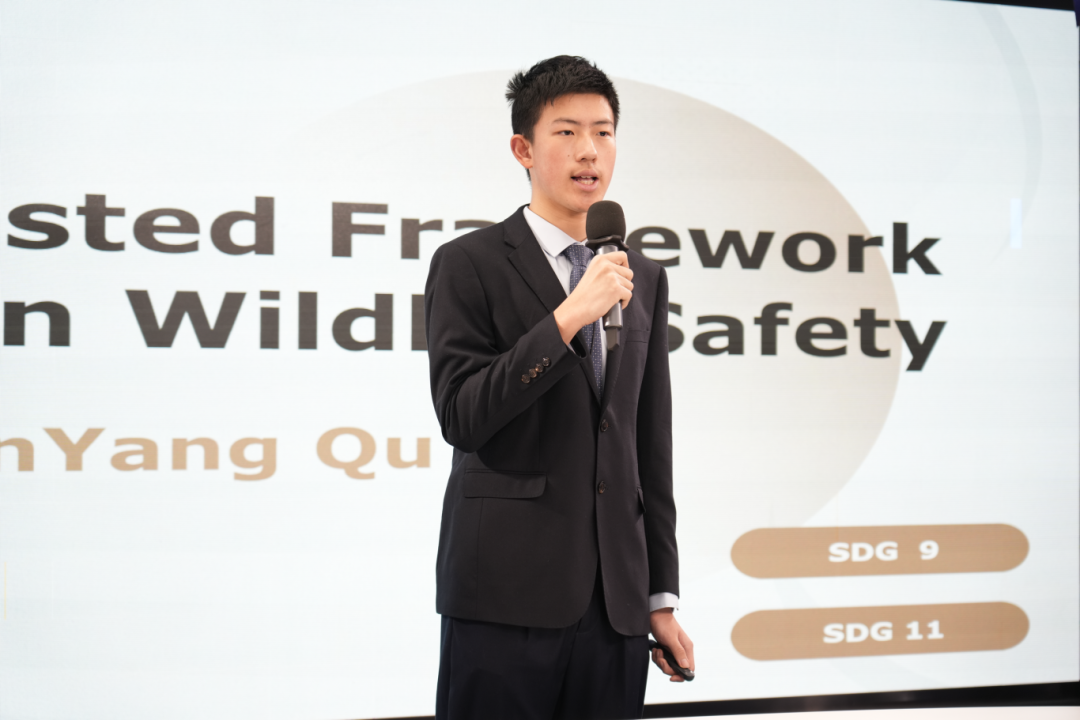
▲Mr. Qu Chenyang, a student at Shanghai Starriver Bilingual School.
Li Chengen from Shanghai Starriver Bilingual School delivered a presentation titled "Governing Medical Tools: Equity-Centered AI Under the Framework of SDG 9 and SDG 17." He opened with three sets of figures: 800 million people worldwide lack access to basic medical services; the density of neurologists in sub-Saharan Africa is less than 0.2 per 100,000 people; and 90% of AI medical training data comes from North America and Europe. Drawing on his personal experience of a family member diagnosed with hepatocellular carcinoma, as well as his own research practice of independently designing a GPC3-targeting ADC drug using AI structure prediction (achieving a 16.9% improvement in binding affinity), he called for the establishment of a binding clinical evaluation framework for AI medical systems, and for the creation of a global health data commons led by the World Health Organization. Through a federated architecture, this would enable the reciprocal sharing of de-identified clinical data from high-income countries with epidemiologically diverse data from low-income countries.
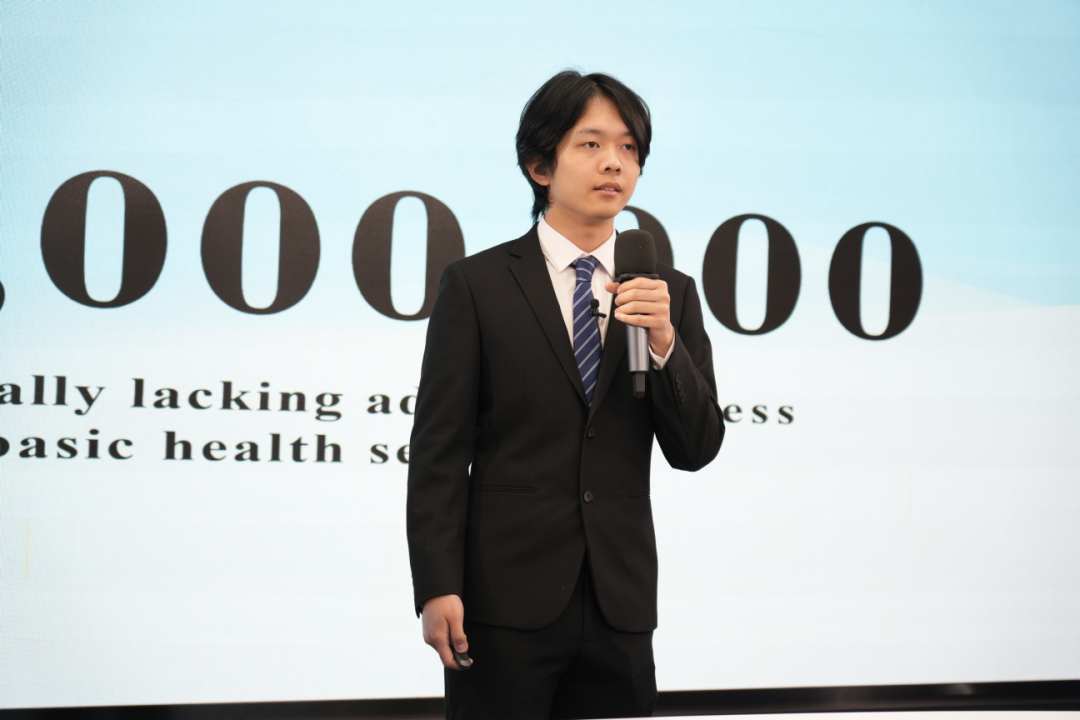 ▲Mr. Li Chengen, a student at Shanghai Starriver Bilingual School.
Xia Han from Shanghai Starriver Bilingual School delivered a presentation titled "AMR Governance: AI Surveillance and Multilateral Standards." Starting from research insights on the overuse of antibiotics in pets, she mapped this mechanism onto the larger governance vacuum in the global livestock sector. Citing data, she noted that while 140 countries monitor human AMR, only 42 have established agricultural drug use monitoring systems. She proposed two mechanisms: establishing a global digital veterinary surveillance standard (requiring member states to implement digital veterinary prescription registries with AI-powered detection of AMR hotspot anomalies), and promoting the establishment of a blockchain-verified "AMR Responsible" certification system for livestock products under the joint framework of Codex Alimentarius and the World Organisation for Animal Health, with compliance incorporated into agricultural insurance premium structures, making responsible behavior the economically rational choice.
 ▲Ms. Xia Han, a student at Shanghai Starriver Bilingual School.
Ma Xiang from Shanghai Starriver Bilingual School delivered a presentation titled "A Strategic Framing for Display: Protecting Cognitive Identity with AI and Multilateralism, Bridging SDG 9 and SDG 17," approaching the topic from the firsthand perspective of a family member of an Alzheimer's patient. Drawing on wet-lab research on the correlation between alpha-Klotho protein deficiency and Alzheimer's disease organoids, as well as the subsequent shift toward "AI-assisted reminiscence therapy," he noted that while biological treatments are unlikely to benefit patients in the short term, AI can achieve breakthroughs in the accessibility of personalized therapy by organizing family photos, recognizing familiar places, and retrieving culturally relevant imagery. He called on member states to integrate AI-assisted home-based reminiscence therapy into national dementia care strategies, and urged UNESCO and the International Telecommunication Union to establish a multi-stakeholder technical working group to develop binding standards for AI health applications that process sensitive memory data, with clear provisions on data minimization, caregiver authorization, and cross-border consent mechanisms.
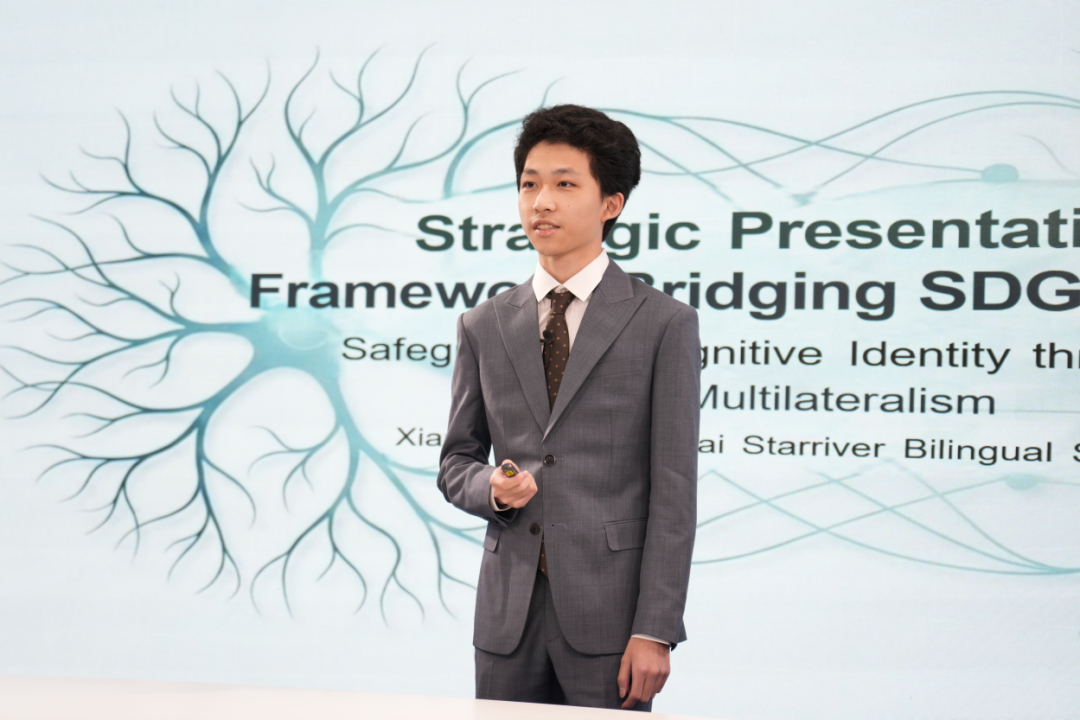 ▲Mr. Ma Xiang, a student at Shanghai Starriver Bilingual School.
In the closing session, Chen Yujie, UN Project Design Consultant, delivered a concluding address. She emphasized that in the AI era, it is essential to establish a global collaborative evidence chain through "trustworthy data" and "responsible AI." She called for upgrading the outcomes of the side event from a one-off interaction into a sustainable delivery network connecting universities, technology platforms, and non-governmental organizations (NGOs), transforming young people's innovative ideas into verifiable and actionable governance outcomes.
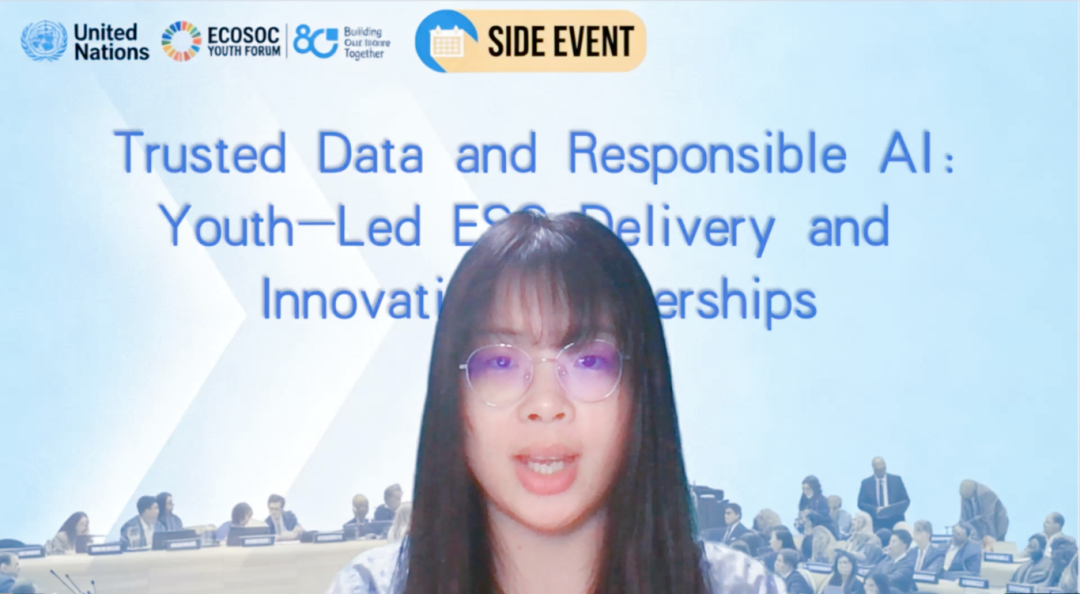 ▲Ms. Chen Yujie, a Project Design Consultant at the United Nations.
Participants engaged in in-depth discussions along the two main themes of "trustworthy data" and "responsible artificial intelligence," covering a wide range of dimensions including educational equity, environmental monitoring, public health, agricultural innovation, industrial scheduling, and urban safety. The consensus that emerged from the session was that in the AI era, youth participation in global sustainable development governance lies not only in raising questions, but also in the ability to establish auditable chains of evidence, replicable delivery pathways, and scalable cross-sectoral cooperation mechanisms, which is precisely the core of moving from commitment to delivery.
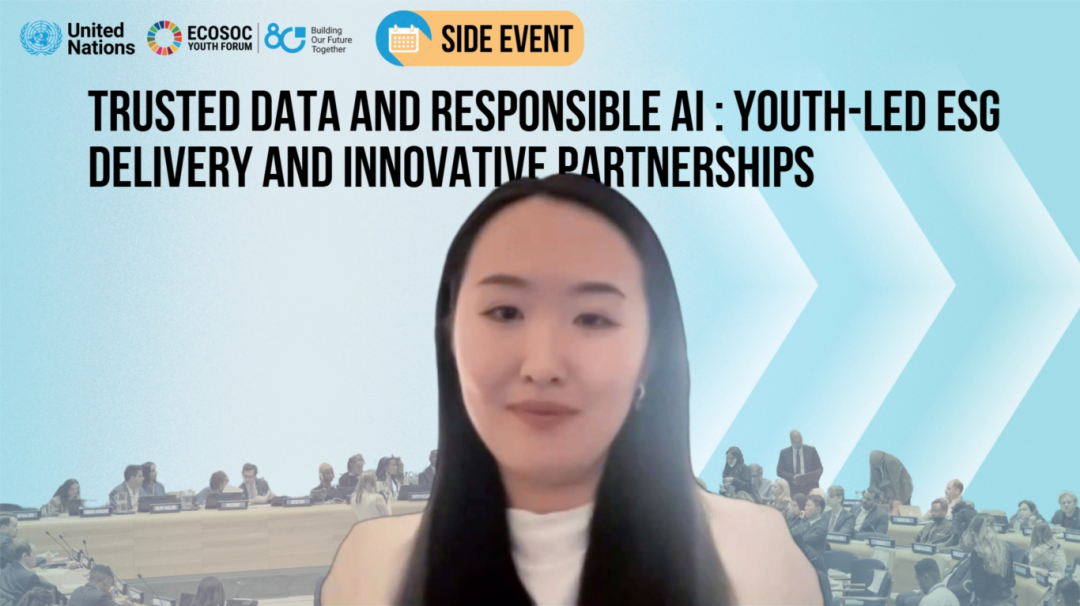
▲The session was moderated by Wang Muyao, Adjunct Lecturer in the Enterprise Risk Management program at Columbia University.