AI Hub
Shanghai Lixin University of Accounting and Finance Visits Grouphorse Group to Explore High-Quality Development Pathways for ESG and AI Industry-Education Integration
Updated:September 23, 2026On the morning of August 6, 2026, Tang Chujie, Deputy Secretary of the Party Committee and Secretary of the Discipline Inspection Commission of Shanghai Lixin University of Accounting and Finance, led a delegation including Zhang Yiqiang, Dean of the School of Finance and Public Administration; Luo Yueling, Deputy Dean; Zhu Ying, Deputy Dean on temporary assignment; Zhao Haiyi, Director of the Taxation Department; and Li Haiyang, Administrative Secretary, to visit Grouphorse Group for focused discussions on cooperation in ESG and AI data annotation projects. Zhang Li, President of Grouphorse Group; Jiang Feng, Assistant to the President; Liu Qiangyun, Director of the University Cooperation Office; and Huang Manli, Assistant Director of the University Cooperation Office, attended the discussion. The two sides held in-depth discussions on disciplinary transformation in finance-related universities, innovation in industry-education integration, and high-quality talent development in the AI era.
Before the meeting, the delegation visited the Volcano Engine AI Agent Industrial Park to learn about the AI industry ecosystem and technology application scenarios.
At the exchange meeting, President Zhang Li, on behalf of Grouphorse Group, warmly welcomed the delegation from Shanghai Lixin University of Accounting and Finance and gave a systematic introduction to the Group’s current development, business system, and strategic planning in ESG and AI data annotation.
Dean Zhang Yiqiang introduced the development of the School of Finance and Public Administration and noted that, as AI technology rapidly reshapes the industrial ecosystem, universities urgently need to engage proactively with the industry frontier and explore new talent-development models. The School hopes to leverage Grouphorse Group’s strengths in international project resources and industry practice to deepen cooperation in ESG and AI data annotation, joint course development, and industrial school construction, helping faculty and students broaden their international perspectives and enhance practical capabilities while promoting the transformation and upgrading of traditional disciplines such as accounting, taxation, and public administration.
During the exchange, the two sides focused on aligning their cooperation models for ESG and AI data annotation projects. Deputy Secretary Tang Chujie noted that enterprises going global currently face multiple challenges, and that there is growing demand for interdisciplinary talent in foreign-related rule of law, cross-border compliance, and professional language services. University-enterprise collaborative education therefore has important practical significance. He looked forward to using the exchange as an opportunity to expand cooperation in emerging areas such as administrative management, elderly care services, and carbon-tax policy, achieving resource sharing and complementary strengths.
In her concluding remarks, Chairman Zhang Li said that Grouphorse Group has always maintained a high-standard quality-control system at the level of international organizations and is committed to developing high-quality, professional, and international AI training datasets while rejecting low-end, low-price data annotation models. She emphasized that Shanghai Lixin University of Accounting and Finance’s disciplinary strengths in finance and taxation, public administration, carbon taxation, and cross-border compliance are highly aligned with Grouphorse Group’s full-industry-chain business. The two sides therefore have a solid foundation and broad prospects for cooperation. Grouphorse Group looks forward to working with the School to create a benchmark demonstration case for “ESG + AI” industry-education integration in finance-related universities and provide a replicable and scalable model for disciplinary transformation and talent supply in the AI era.
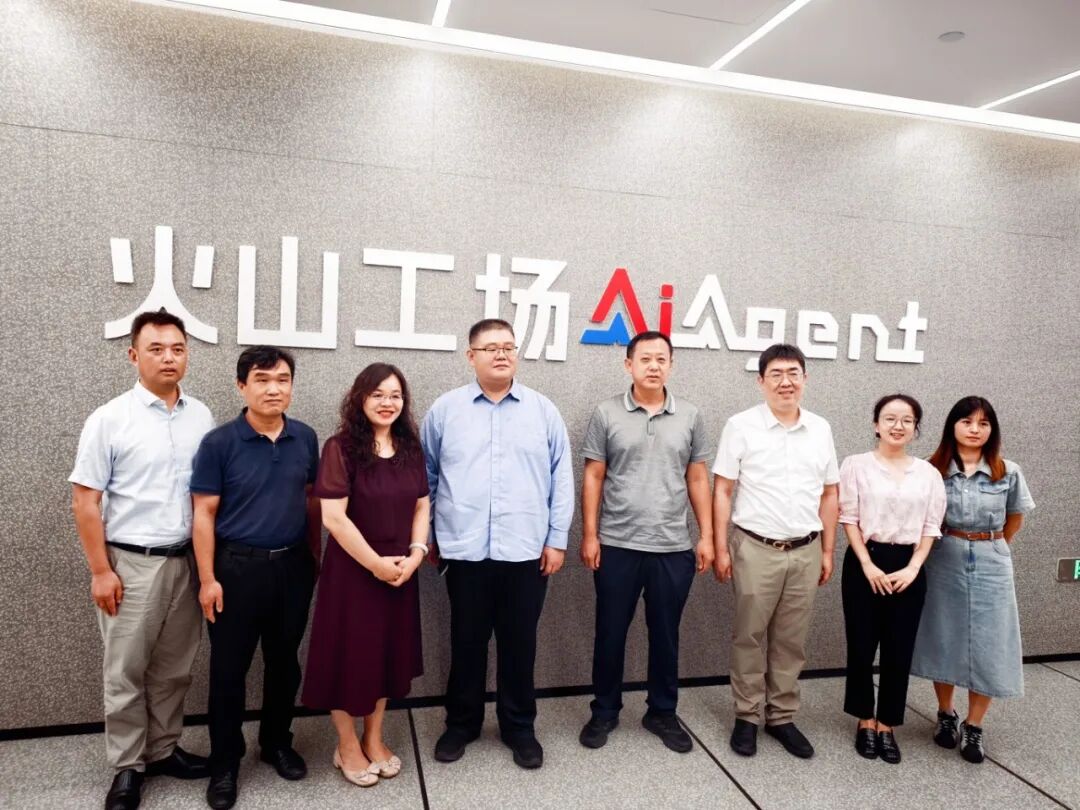
▲ All participants take a group photo after the meeting
The exchange marked an important step forward in the efforts of Grouphorse Group and Shanghai Lixin University of Accounting and Finance to organically connect the education, talent, industrial, and innovation chains. Going forward, the two sides will continue to deepen their engagement, explore new mechanisms for university-enterprise collaborative education, and jointly serve national strategies and global development needs.