AI Hub
Grouphorse Group Co-Hosts a Side Event of the 2026 United Nations High-Level Political Forum on Sustainable Development
Updated:September 28, 2026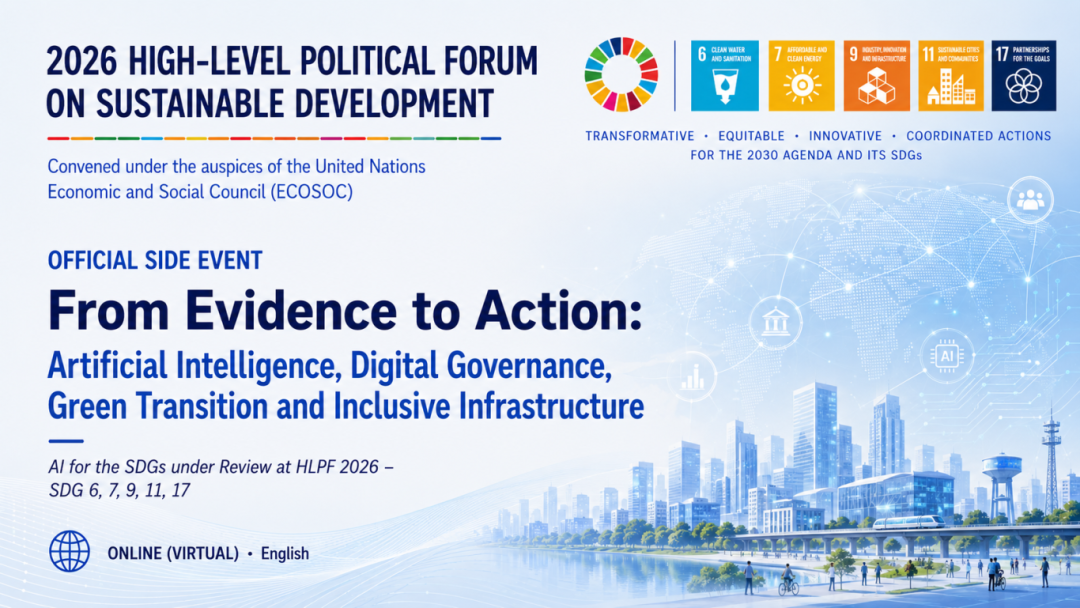
On July 10, 2026, U.S. Eastern Time, the side event of the 2026 United Nations High-Level Political Forum on Sustainable Development (HLPF), entitled “From Evidence to Action: Artificial Intelligence, Digital Governance, Green Transition, and Inclusive Infrastructure,” was held online. The event was jointly hosted by the Tianjin Eco-City Friends of Green Ecology and Culture Promotion Association and Grouphorse Group.
The event focused on how artificial intelligence can be translated from technological innovation into verifiable, accountable, and sustainable public action. It echoed the Sustainable Development Goals (SDGs) under review at this year’s United Nations High-Level Political Forum, including SDG 6 “Clean Water and Sanitation,” SDG 7 “Affordable and Clean Energy,” SDG 9 “Industry, Innovation and Infrastructure,” SDG 11 “Sustainable Cities and Communities,” and SDG 17 “Partnerships for the Goals.” Professionals from the United Nations system and the technology and healthcare sectors, as well as youth representatives from schools in China and Singapore, attended the event.
As a co-host, Grouphorse Group developed the agenda around AI accountability, data quality, model risks, public trust, and youth participation. It brought together the oversight mechanisms of international organizations, the engineering practices of technology companies, healthcare governance, and the social perspectives of the younger generation within a common dialogue framework, promoting closer policy alignment among artificial intelligence, digital governance, green transition, and inclusive infrastructure development.
Guo Lingxin, Director of AI Data and Strategic Partnerships at Grouphorse Group, moderated the event.

▲ Guo Lingxin, Director of AI Data and Strategic Partnerships at Grouphorse Group, moderates the event
In his opening remarks, Tang Xing, Chairman of Grouphorse Group, noted that artificial intelligence, digital governance, green transition, and inclusive infrastructure are not isolated from one another, but mutually supportive and reinforcing. Artificial intelligence can turn evidence into insights; digital governance defines the boundaries of accountability for innovation; green transition requires more informed decision-making; and inclusive infrastructure must ensure that the benefits of development reach different regions and social groups.
Tang Xing emphasized that with less than four years remaining until 2030, the current challenge is not a lack of evidence or solutions, but whether they can be translated into action at the necessary speed and scale without sacrificing inclusiveness, accountability mechanisms, and public trust. Technology brings speed, governance provides direction, and inclusion determines who benefits from development. Artificial intelligence can provide support, but it cannot replace political will or human responsibility.
He noted that Grouphorse Group’s relevant businesses connect multilingual communication, high-quality AI data, and data governance. The inclusiveness and trustworthiness of artificial intelligence depend to a large extent on whether the data behind it are accurate, responsibly governed, and capable of reflecting different languages, cultures, and lived experiences. Grouphorse Group is working to transform linguistic and cultural diversity into a trustworthy data foundation and provide professional support for the responsible development and application of artificial intelligence.
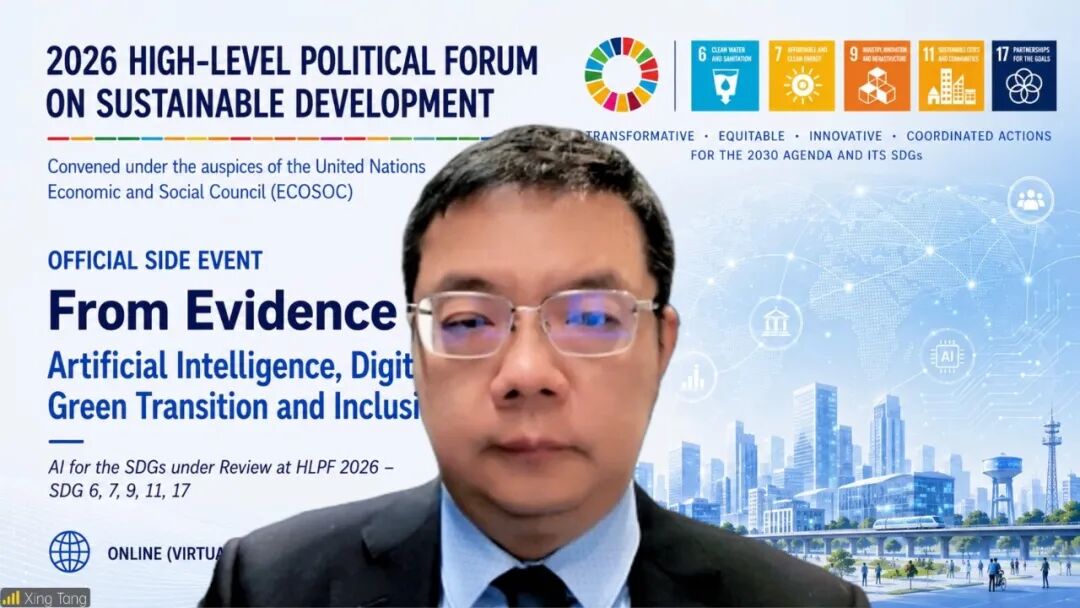
▲ Tang Xing, Chairman of Grouphorse Group, delivers opening remarks
Mario Baez, former Chief Accountability Officer of the United Nations Secretariat, delivered a keynote address entitled “Who Exercises Oversight over Artificial Intelligence and Algorithms? Accountability for the 2030 Agenda.” He noted that algorithms should not be regarded as isolated technological tools, but as systemic variables within institutional and organizational governance systems. Once artificial intelligence is used for public policymaking, resource allocation, and public services, it must be subject to oversight, auditing, and accountability tracking commensurate with other major public decisions.
Drawing on more than 30 years of experience in oversight within the United Nations system, Mario Baez proposed incorporating enterprise risk management and results-based management mechanisms into AI governance. Any international organization, government agency, or civil society organization deploying artificial intelligence should establish a dedicated AI risk matrix and continuously assess data sources, algorithmic bias, information security, operational transparency, and potential social impacts, while establishing an independent oversight loop linking issue identification, corrective action, and verification of results.
He pointed out that when artificial intelligence is applied in areas such as clean water, energy systems, and urban governance, particular attention should be paid to whether training data reflect local realities, whether public authorities have the capacity for continuous oversight, whether ordinary people and vulnerable groups can be protected from the effects of algorithmic errors, and whether clear and long-term responsibility arrangements have been established among technology providers, public institutions, and civil society organizations.
He candidly stated that the “black box” of machine learning must not become a shield for institutions to evade accountability, nor should technological complexity become an excuse for bypassing human rights responsibilities and public accountability. The effectiveness of digital governance projects should not be measured only by how many platforms are built, how much data are collected, or how advanced the software is. More importantly, it should be measured by whether the technologies actually improve access to safe drinking water and clean energy, social inclusion, and people’s well-being. “As machines learn, institutions must not forget.”

▲ Mario Baez, former Chief Accountability Officer of the United Nations Secretariat, delivers a keynote address
Akhil Sharma, a software development engineer at Meta, delivered a speech entitled “From Engineering to Governance: Lessons from Building AI Systems at Global Scale.” Drawing on frontline engineering practice, he noted that in AI systems serving large user populations, even when accuracy reaches 99%, the remaining errors can still affect a vast number of individuals and families. Therefore, AI governance cannot remain focused solely on product outputs. Safety mechanisms, data quality, population representation, and accountability arrangements should be incorporated into system design, model training, and deployment evaluation from the outset.
Akhil Sharma proposed adopting tiered governance according to the level of risk associated with AI applications. Relatively simplified governance measures may be adopted for low-risk everyday applications. In areas such as finance and transportation that may directly affect individual rights and interests, AI should provide support while humans make the final decisions. In low-tolerance-for-error fields such as healthcare and life safety, human leadership and AI assistance must be maintained.
He stated that the larger the scale of an AI system and the broader the population it covers, the greater the responsibility borne by developers and deploying institutions. Engineering efficiency and the speed of product iteration cannot substitute for careful assessment of individual rights, social equity, and long-term impacts. Trustworthy AI should not be an add-on module after system development is completed, but an integral part of the technical architecture itself.
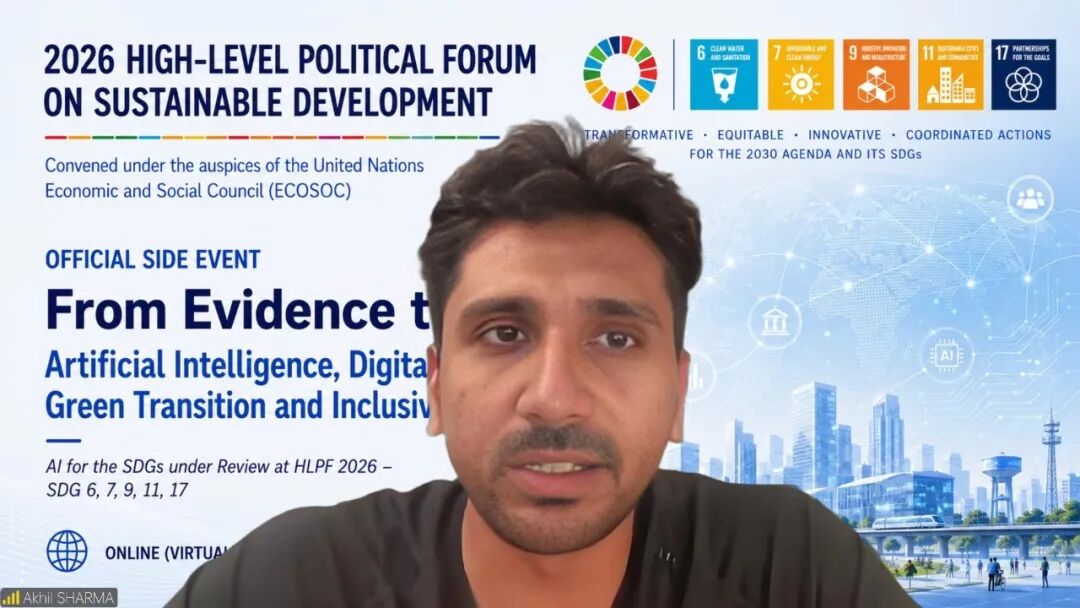
▲ Akhil Sharma, software development engineer at Meta, delivers a keynote address
Dr. Thinkwell Jamera, Board Member and Director of the Association of Healthcare Professionals of Jersey (AHCP), physician, and medical education and research professional, delivered a keynote address entitled “From Clinical Evidence to Public Trust: AI Governance for Inclusive Health Systems.”
Thinkwell Jamera noted that healthcare systems worldwide continue to face challenges including shortages of professionals, uneven resource allocation, and inadequate coverage of essential health services. The development of artificial intelligence should not focus solely on further improving the operational efficiency of well-resourced healthcare institutions, but should also help understaffed, resource-constrained, and chronically overburdened health systems strengthen their service capacity.
He pointed out that artificial intelligence can support care, but cannot replace care. Healthcare involves not only diagnosis, prediction, and data analysis, but also communication between healthcare professionals and patients, ethical judgment, informed consent, and an understanding of patients’ individual circumstances. If training data fail to adequately cover populations from different geographic, cultural, and socioeconomic backgrounds, AI will not only struggle to narrow disparities in healthcare services, but may also further digitize, automate, and scale existing inequalities.
He argued that healthcare AI governance should not be treated solely as a technology management issue, but should be incorporated into public health and health-system governance. Healthcare institutions should strengthen clinical validation, data protection, algorithmic bias assessment, and professional oversight, ensuring that patients understand the role AI plays in the diagnostic and treatment process and that clear human accountability remains in place. In healthcare, trust is not an add-on condition after innovation is completed; it is the infrastructure that enables innovation to enter practical application.

▲ Thinkwell Jamera, Board Member and Director of the Association of Healthcare Professionals of Jersey (AHCP), delivers a keynote address
In the “Voices of the Next Generation” session, seven representatives spoke on issues including misinformation, smart cities, public spaces, gender equality, cultural heritage, and generative artificial intelligence, putting forward action-oriented proposals from a youth perspective.
Han-yu Li, a student at Shanghai Qingpu Pinghe Bilingual School, spoke on “Seeing Is No Longer Believing: AI-Generated Images and Fake News.” He analyzed the potential impact of AI-generated fake images on financial markets, disaster relief, and public judgment. He proposed that as generated content becomes increasingly realistic, the public should move from “seeing is believing” to “verification is believing” by checking information sources, comparing authoritative reports, examining image details, and using verification tools to strengthen digital information literacy.

▲ “Voices of the Next Generation” representative: Han-yu Li (Shanghai Qingpu Pinghe Bilingual School)
Chen Yixin, a student at Shanghai Star River Bilingual School, spoke on people-centered AI governance in cities. She argued that smart city development should not focus only on transportation efficiency, data connectivity, and automation, but should also address issues such as loneliness, community alienation, and mental well-being that can easily be overlooked by technological indicators. She suggested incorporating indicators of social cohesion, community participation, and mental well-being into smart city evaluation systems.

▲ “Voices of the Next Generation” representative: Chen Yixin (Shanghai Star River Bilingual School)
Jiang Nan, a student at Shanghai Star River Bilingual School, examined “hostile architecture” in urban public spaces, analyzing the implicit exclusion caused by segmented benches, anti-sleeping devices, and similar designs toward people experiencing homelessness, older adults, and other vulnerable groups. She proposed that urban governance should reduce the practice of substituting spatial exclusion for social services, and should safeguard equal rights to urban space for different groups by upgrading public facilities, revitalizing underused spaces, and improving social support systems.

▲ “Voices of the Next Generation” representative: Jiang Nan (Shanghai Star River Bilingual School)
Zhang Wendai, a student at St. Joseph’s Institution International in Singapore, spoke on the equal participation of young women in economic activities. She noted that educational attitudes, occupational stereotypes, pay gaps, and insufficient social support continue to constrain the development of young women. She recommended strengthening gender equality education, encouraging employers to improve transparency in compensation and promotion mechanisms, and establishing a cross-border mentoring network for young women.
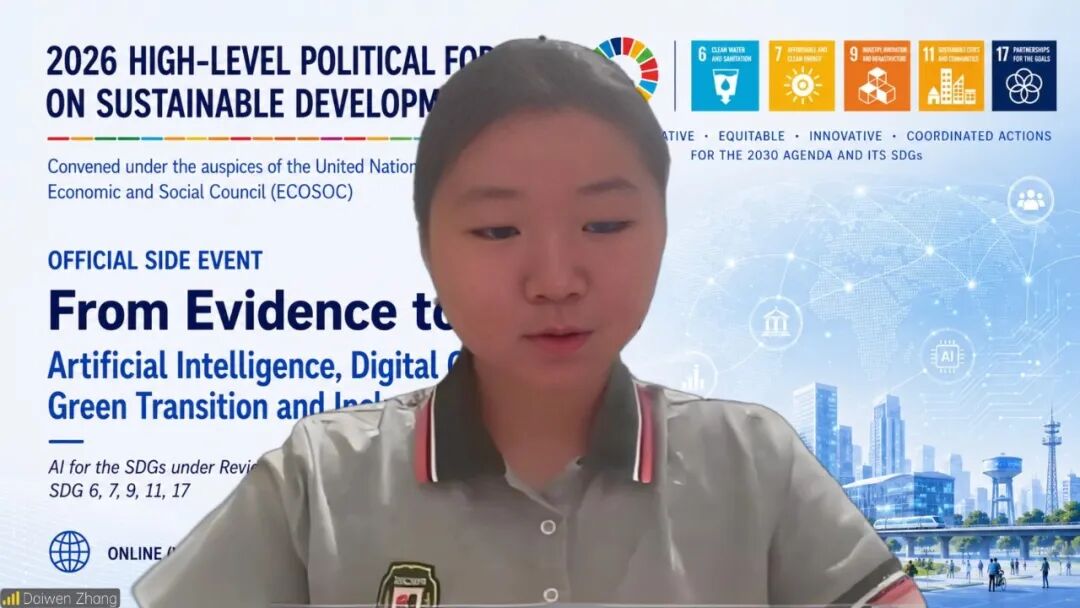
▲ “Voices of the Next Generation” representative: Zhang Wendai (St. Joseph’s Institution International, Singapore)
Liang Kangyue, a student at Shanghai Star River Bilingual School, discussed the impact of feed algorithms on the dissemination of intangible cultural heritage, drawing on her experience learning Chinese dance and conducting cultural research. She noted that on platforms where click-through rates, viewing time, and completion rates are major indicators, traditional cultures with complex historical backgrounds and complete ritual structures can easily be reduced to fleeting visual symbols stripped of context. She recommended introducing a requirement for “contextual integrity” into the digitization of cultural heritage and platform dissemination rules.
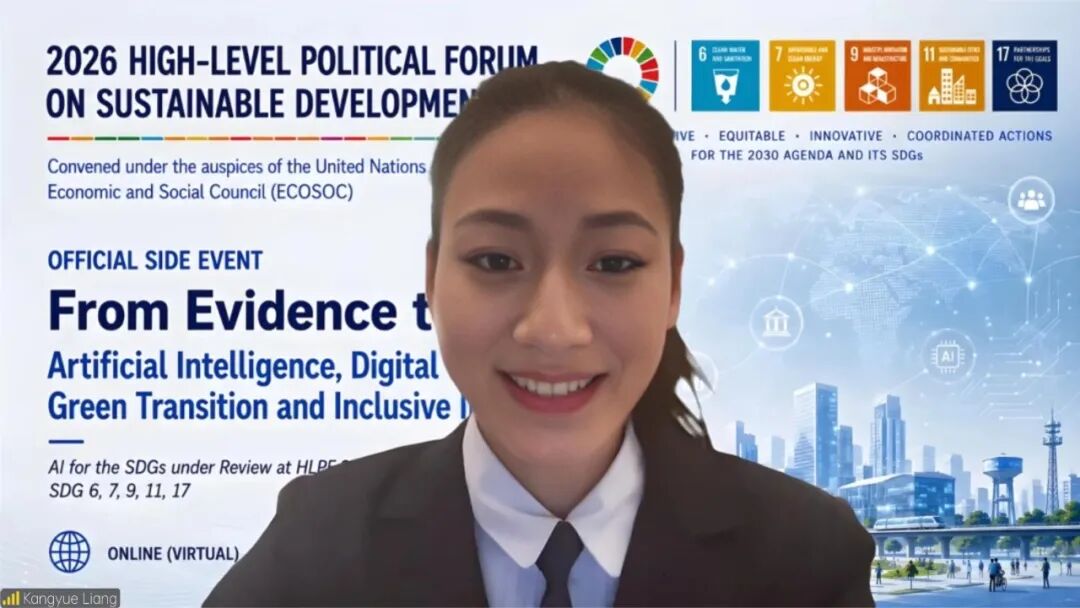
▲ “Voices of the Next Generation” representative: Liang Kangyue (Shanghai Star River Bilingual School)
Zhang Zhaomeng, a student at the University of International Re lations, used examples from China’s smart city and sponge city development practices to propose three principles for AI-supported urban governance: accountability, data inclusion, and citizen participation. She stated that technological advancement does not necessarily mean urban sustainability. Urban governance must also examine whether systems can respond to the real needs of different groups, withstand public oversight, and maintain fairness while improving efficiency.
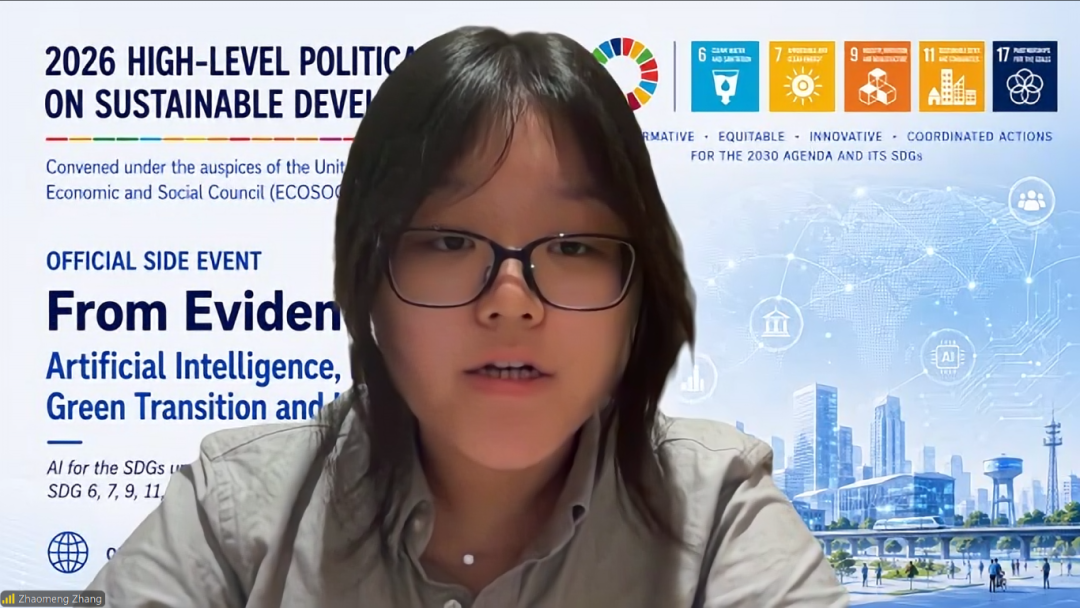
▲ “Voices of the Next Generation” representative: Zhang Zhaomeng (University of International Relations)
Jiang Wenwen, a student at Shanghai Soong Ching Ling School, focused on cultural diversity and creators’ rights in the era of generative artificial intelligence. She proposed that AI training and content generation should follow the principles of consent, attribution, and fair remuneration; that mechanisms for disclosing training-data sources and labeling AI-generated content should be improved; and that relevant international organizations should strengthen coordination on content provenance and technical standards to prevent minority cultures, languages, and knowledge traditions from being marginalized in AI systems.

▲ “Voices of the Next Generation” representative: Jiang Wenwen (Shanghai Soong Ching Ling School)
Chen Yujie, a UN project design consultant, said in her closing remarks that the three keynote speeches, from the perspectives of institutional oversight, engineering design, and healthcare practice, together formed a basic framework for moving from evidence to action. Evidence can be truly translated into sustainable action only through clear accountability, risk management, results evaluation, and public participation.
She noted that the speeches by the youth representatives demonstrated that young people are not merely users of AI products, but also important stakeholders in urban governance, cultural heritage, public policy, and the digital economy. The younger generation should not merely wait to be consulted, but should be fully included in rulemaking, technology design, and project evaluation.
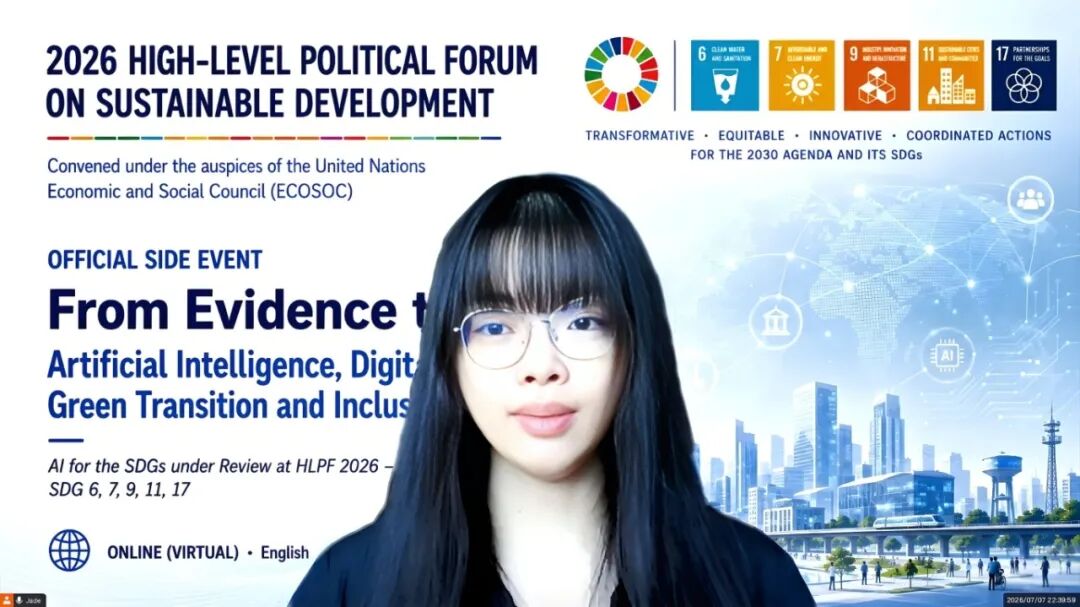
▲ Chen Yujie, UN project design consultant, delivers closing remarks
Participants noted that artificial intelligence provides new technological conditions for advancing the Sustainable Development Goals, but its value cannot be measured solely by model parameters, computing scale, or commercial efficiency. International organizations, governments, technology companies, universities, and civil society organizations should further strengthen cooperation and integrate transparency, data inclusion, risk management, independent oversight, and human dignity throughout the entire AI system life cycle.
As a co-host and agenda lead, Grouphorse Group participated in the design of the event around issues including high-quality AI data, model governance, and cross-lingual risk identification. In recent years, Grouphorse Group has continuously expanded its multilingual service capabilities into AI data, model evaluation, and data governance, promoting the application of language quality management, cross-cultural communication, and experience in international organization projects to AI governance.
Grouphorse Group stated that it will continue to strengthen cooperation with international organizations, universities, and relevant institutions, improve its capabilities in AI data quality management, model evaluation, and risk governance, and provide support for safe, trustworthy, and inclusive applications of artificial intelligence.
This side event of the United Nations High-Level Political Forum on Sustainable Development represents another practical initiative by Grouphorse Group to advance the themes of AI for good, data governance, and youth participation on the multilateral stage of the United Nations. Relevant content from the event will be incorporated into the official United Nations website.